Občianska vybavenosť
Kampus Cihelna
Elementary and Secondary School Roztoky - design competition
The dynamically developing Roztoky – a satellite town near Prague – is experiencing a population wave that is projected to last at least until the second half of the 21st century. The Cihelna Campus is being created as a response to the need for high-quality education for new generations and, simultaneously, as a platform for a new community center for the town of Roztoky and its wider surroundings.
Parallel to the aging population trend, demand for senior rental housing with accessible care services is also growing. This type of housing suitably complements the demographic mix of the wider project area. Thus, the new inclusive school can offer its spaces not only to children but also to adults and seniors within the concept of lifelong learning.
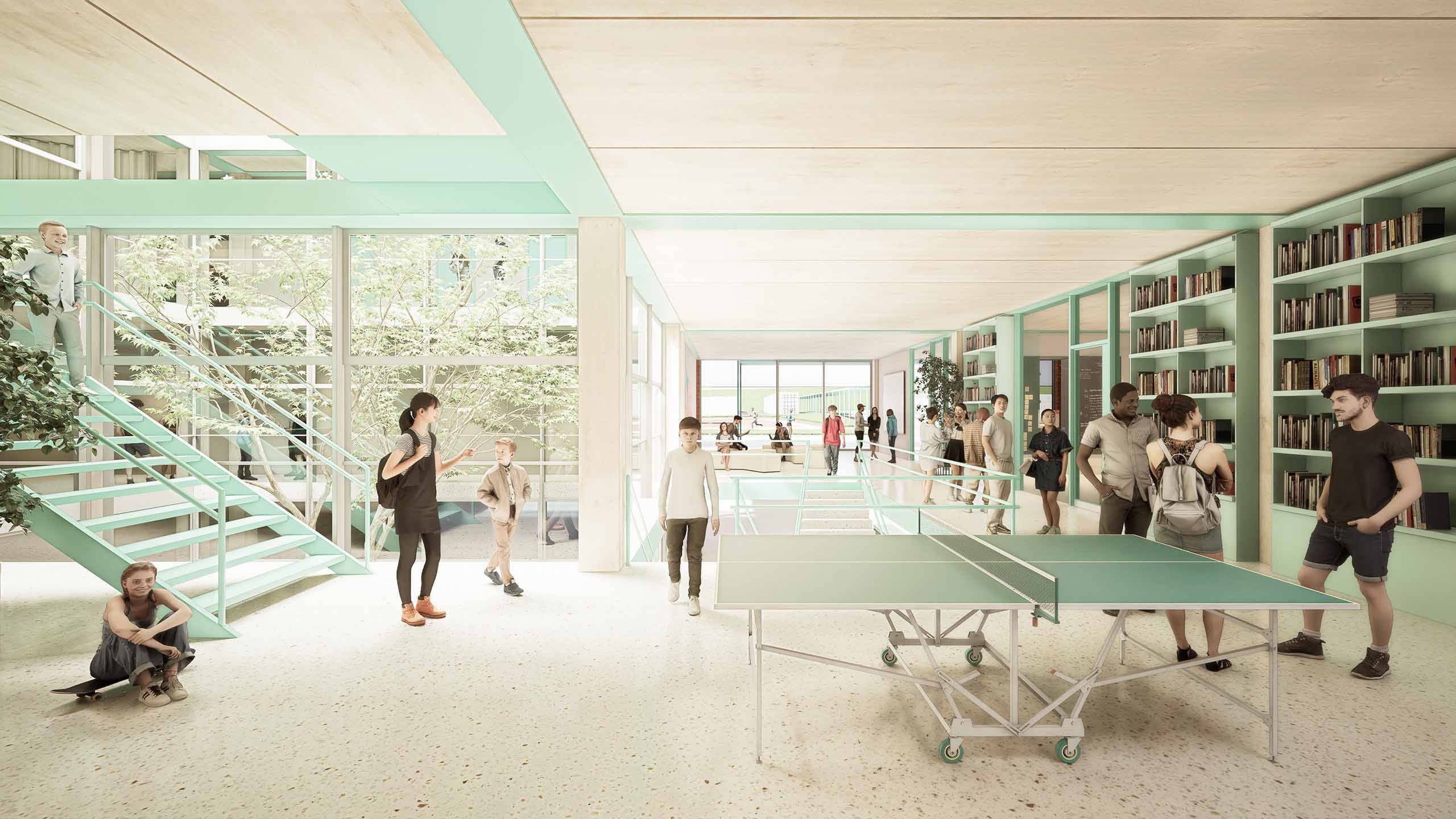
Our vision is a campus with a school that will be vibrant from early morning until late evening. The new inclusive school will open its specialized classrooms, community spaces, and sports facilities not only to children and youth but to all residents, including seniors – for community, cultural, and educational activities during non-school hours. The future school will thus transform into a new urban forum – a community platform open to all residents of Roztoky and the surrounding region, where the world of children naturally connects with the experience of adults.
School as the Fifth Teacher
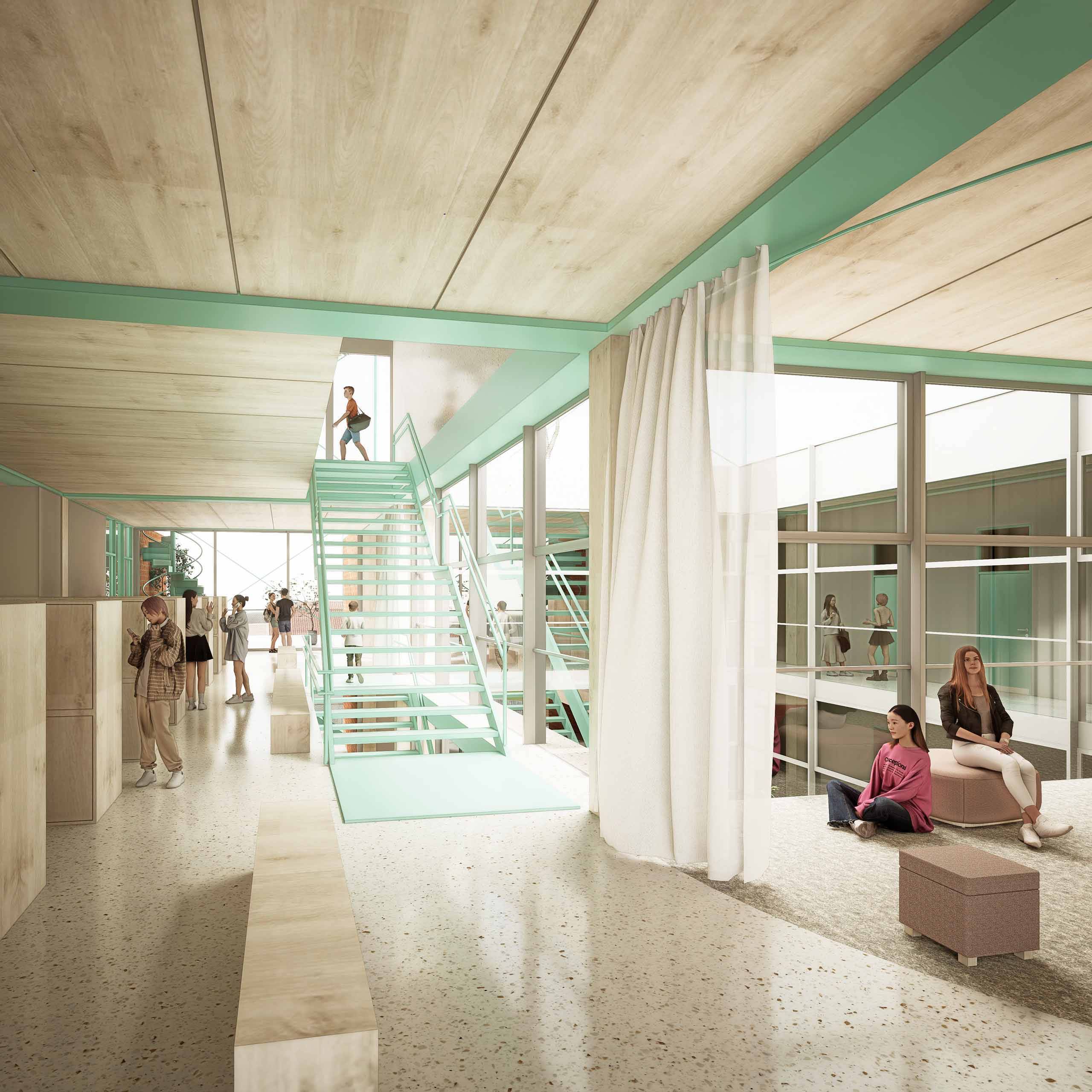
The design of the school campus is based on the philosophy that the school environment has a formative and educational character – it functions as the "fifth teacher." The architecture is designed to actively support learning, curiosity, movement, interpersonal relationships, and the development of student independence. Concrete manifestations of this approach include architectural elements such as glass walls, outdoor classrooms, community spaces, and cluster layouts, which together create an environment that encourages openness, collaboration, and independent thinking.
Urban Concept
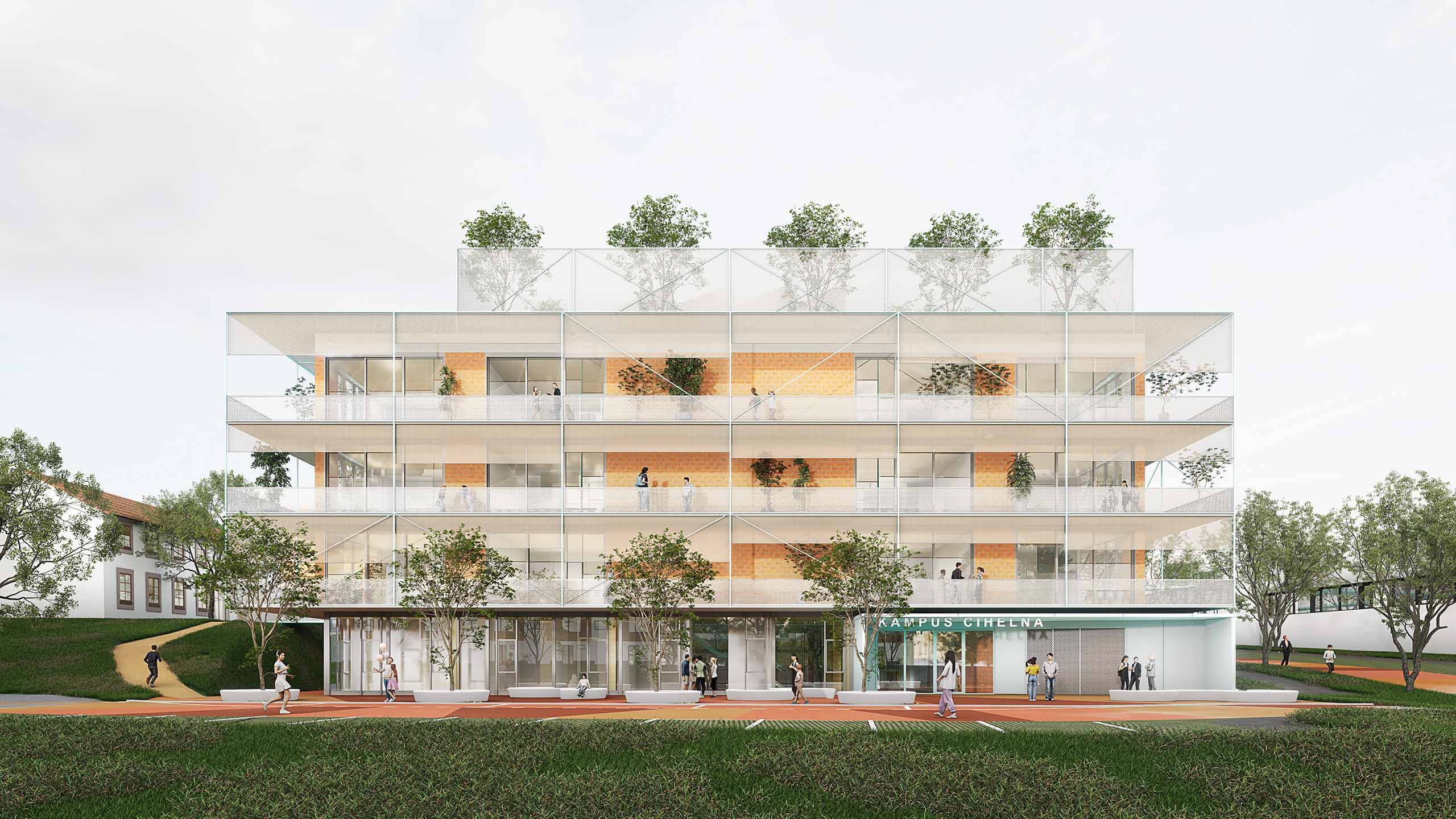
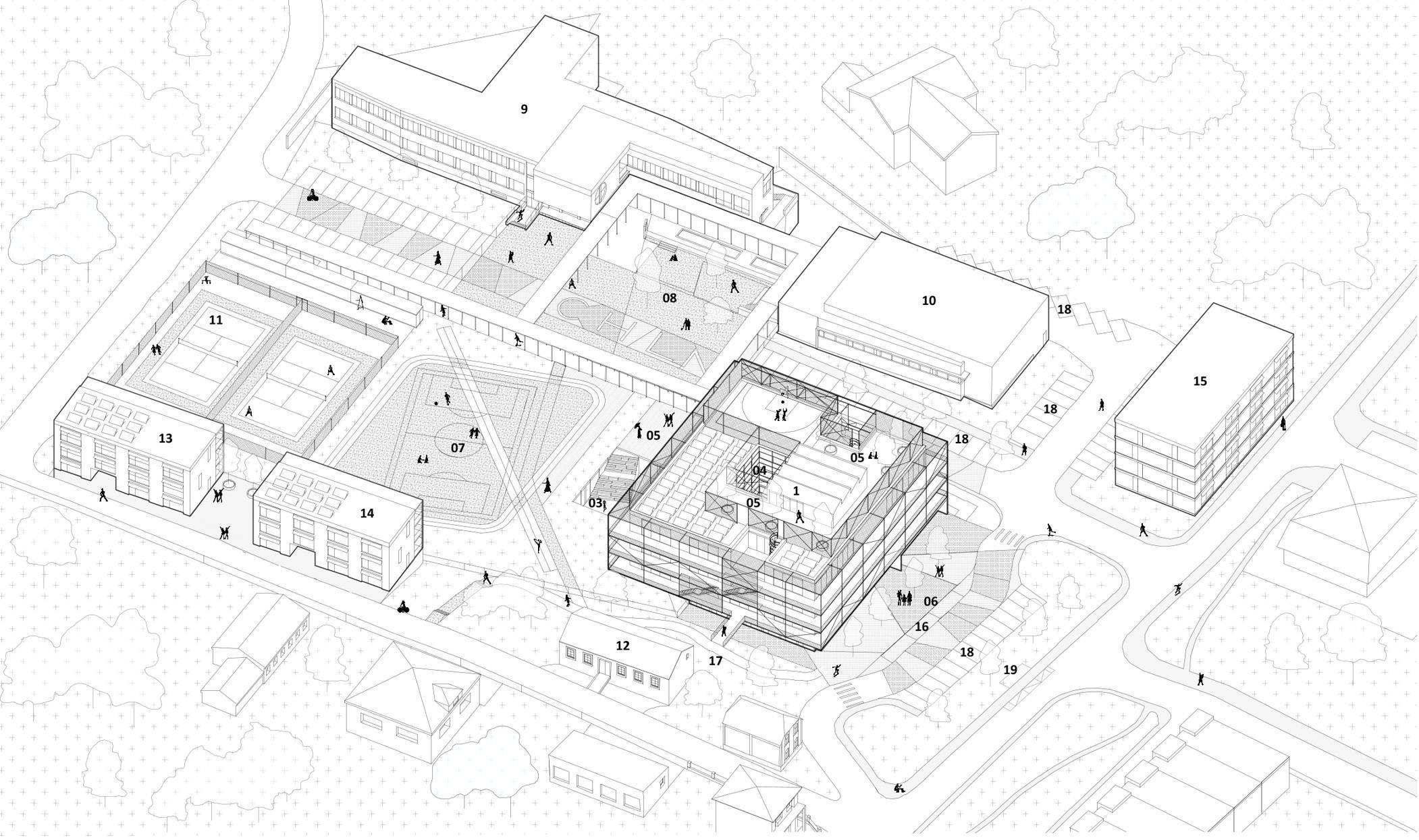
A solitary, rationally shaped building brings clear logic to a previously fragmented area and creates a safe and full-fledged schoolyard. The placement of the block divides the site into separate but interconnected zones with a balanced ratio of educational, sports, and community functions.
Reinterpretation of Kantorova Street Kantorova Street, originally planned as part of the division of the territory into several separate developer units, no longer meets the needs of the campus. The proposal therefore transforms it into an integral part of the site: car traffic is redirected to a service road in the western part (in accordance with the Horní Žalov regulatory plan), which also ensures access to the parking lot by the tennis courts and to the newly proposed rental housing in the southwestern sector. The original road is transformed into a three-zone public space – two peripheral parking areas and a central zone designated for safe recreation and sports within the school square.
Spatial Concept of the Ground Floor
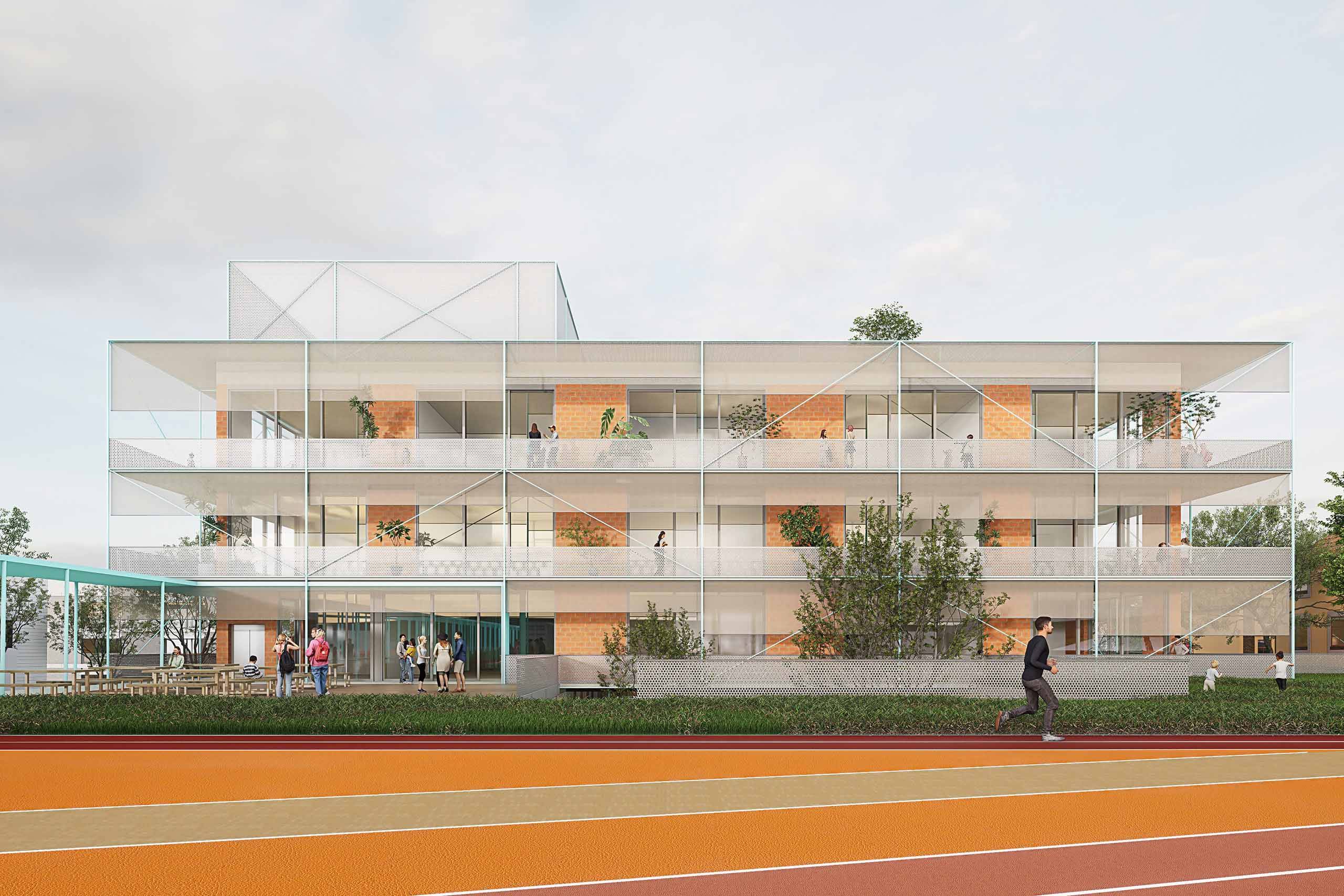
The designed building effectively utilizes the terrain morphology, allowing for the full utilization of the basement level. The rear part of the basement is illuminated by an inner-block atrium, which also connects the basement level directly with the sports area and facilitates the smooth movement of students between individual zones. Thanks to this spatial solution, the first two floors are freed up for community activities: afternoon clubs, lifelong learning courses, or the multifunctional lecture hall remain in direct contact with the public ground floor. The building thus becomes a living hub that connects school and community functions into one cohesive and logical whole.
Campus
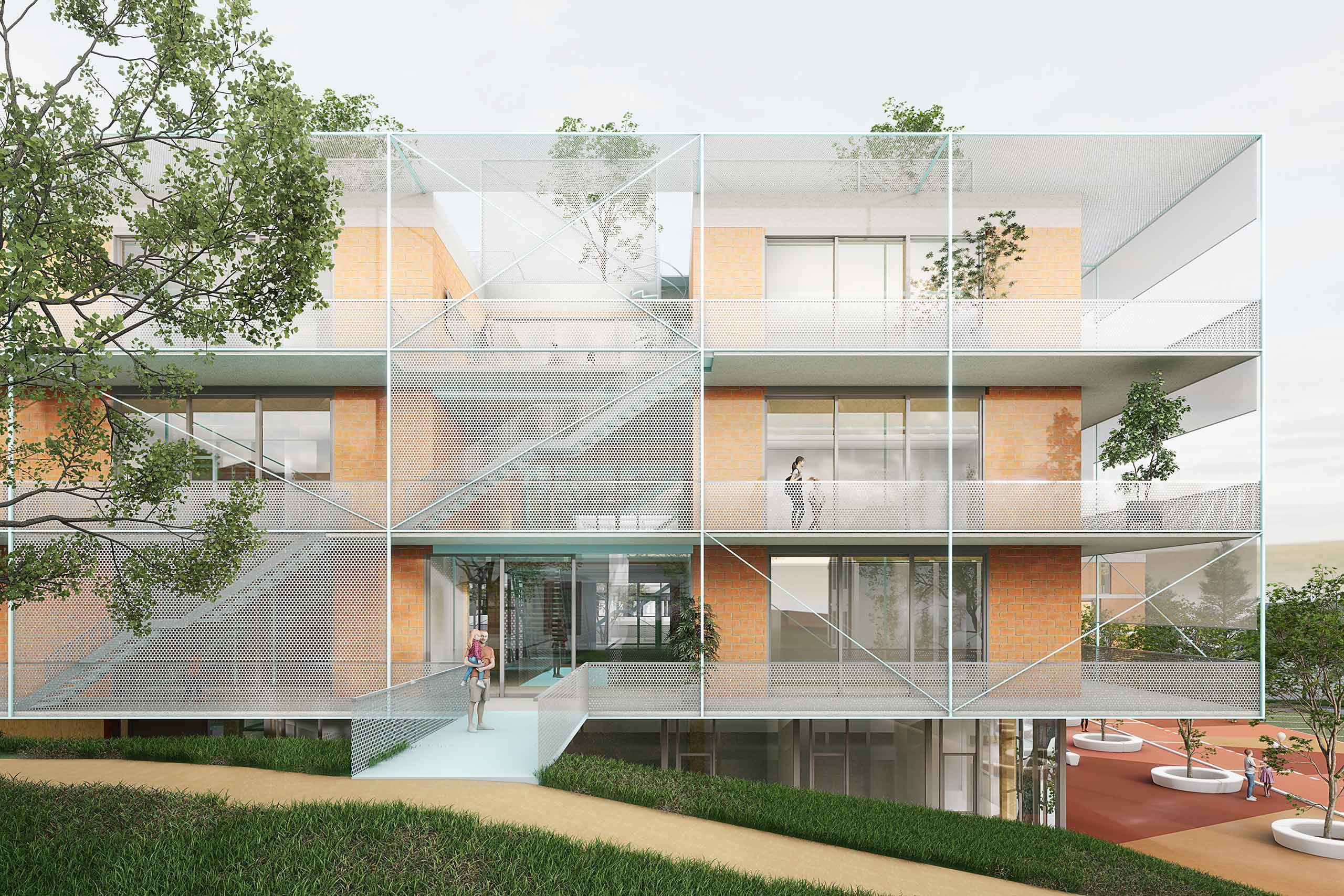
Thanks to the placement of the urban block, the future campus is divided into several interconnected zones:
• School Square - An urban atrium is created along the path of the original road between the original and new school and the gymnasium, lined with pergolas that allow for comfortable "dry-shod" movement. The resulting outdoor area serves as a communication hub and a vibrant school square – a space for relaxation, markets, cultural performances, or a summer cinema.
• Eastern Forecourt - Flexible Mobility Zone: On the eastern side, a multifunctional ground floor with restricted car access is formed. In the morning hours, it functions as a dynamic "kiss & ride" zone; during the day, it transforms into a peaceful public space, and in the afternoon, it provides parking for visitors of extracurricular activities.
• Southern Park and Community Connection - A public park is created between the new building and the existing building on Za Cihelnou Street, which has potential for community use. This relaxation zone naturally connects the sports area with Za Cihelnou Street and offers space for the building's future community functions.
• School Playground - The proposal includes the creation of a new, safe inner courtyard behind the school, providing students with a natural and protected background. This space will house a new sports area with a running straight and workout zones, designed to support diverse physical activity across all age groups.
Area Development
The proposal also considers future urban development in the form of standalone solitary buildings that sensitively complement the existing development. To achieve a balanced demographic composition, we propose a rental house for seniors with integrated care services in the northeastern part, thereby creating a dignified setting for active aging in the immediate vicinity of the campus. In the southwestern part of the territory, we situate rental gallery-access housing. Access galleries, oriented toward the school campus, minimize mutual disturbance while bringing a vibrant community dimension to the entire complex.
Proposed Layout in Relation to Pedagogical Principles
A cluster layout of core classrooms for the lower secondary school and high school is designed in the new campus, creating a modern and inspiring environment for teaching.
The project includes four clusters, each serving four core classrooms. Within each cluster, there is a conscious mixing of grades – small vertical communities are formed in both the lower secondary school (grades 6–9) and the high school (grades 1–4), supporting peer learning, mentoring, and a natural continuity of knowledge. The clusters are divided into two above-ground floors – the lower serves the lower secondary school, the upper belongs to the high school. This arrangement ensures the necessary degree of autonomy for both age groups while allowing easy access to common areas and the implementation of joint projects.
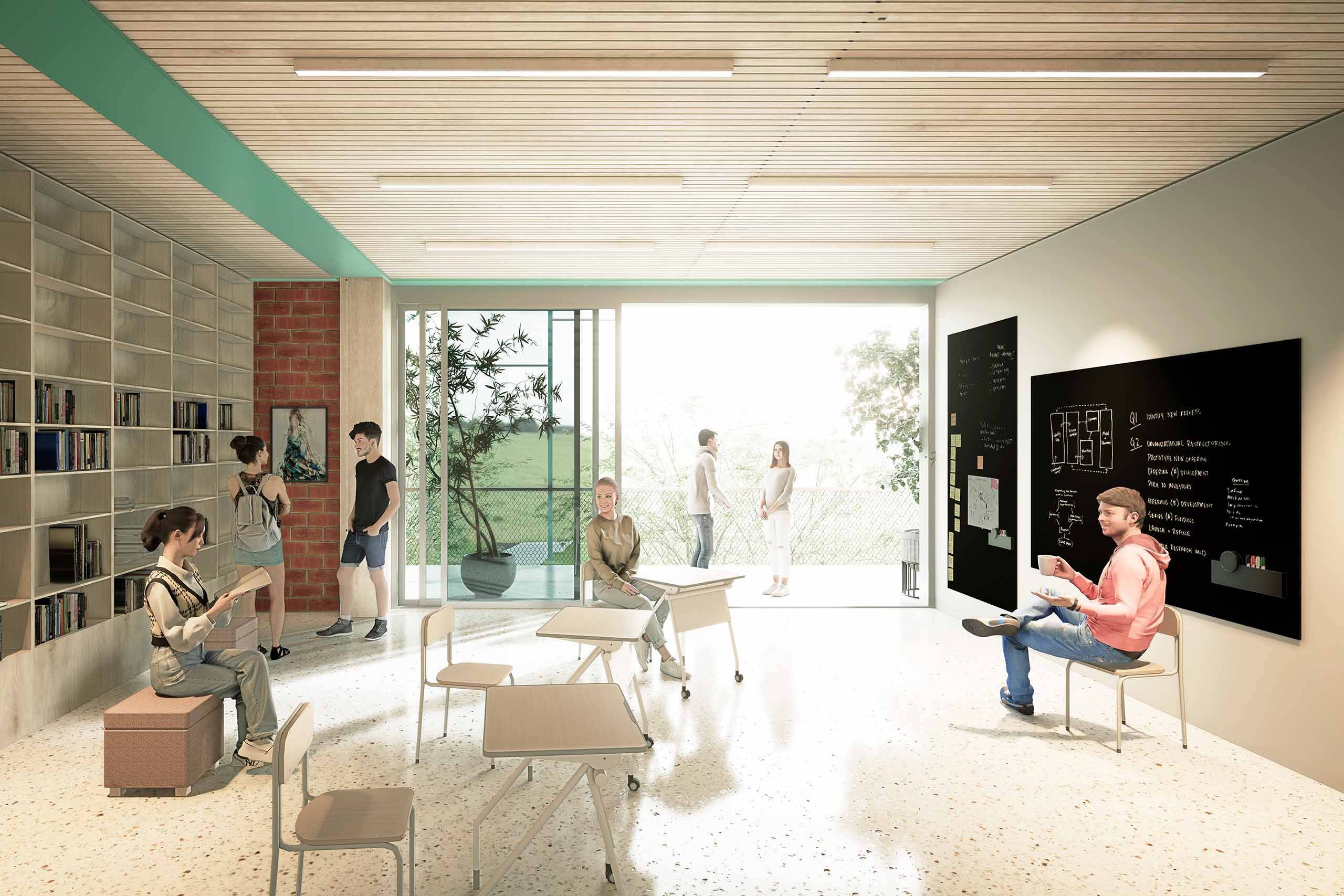
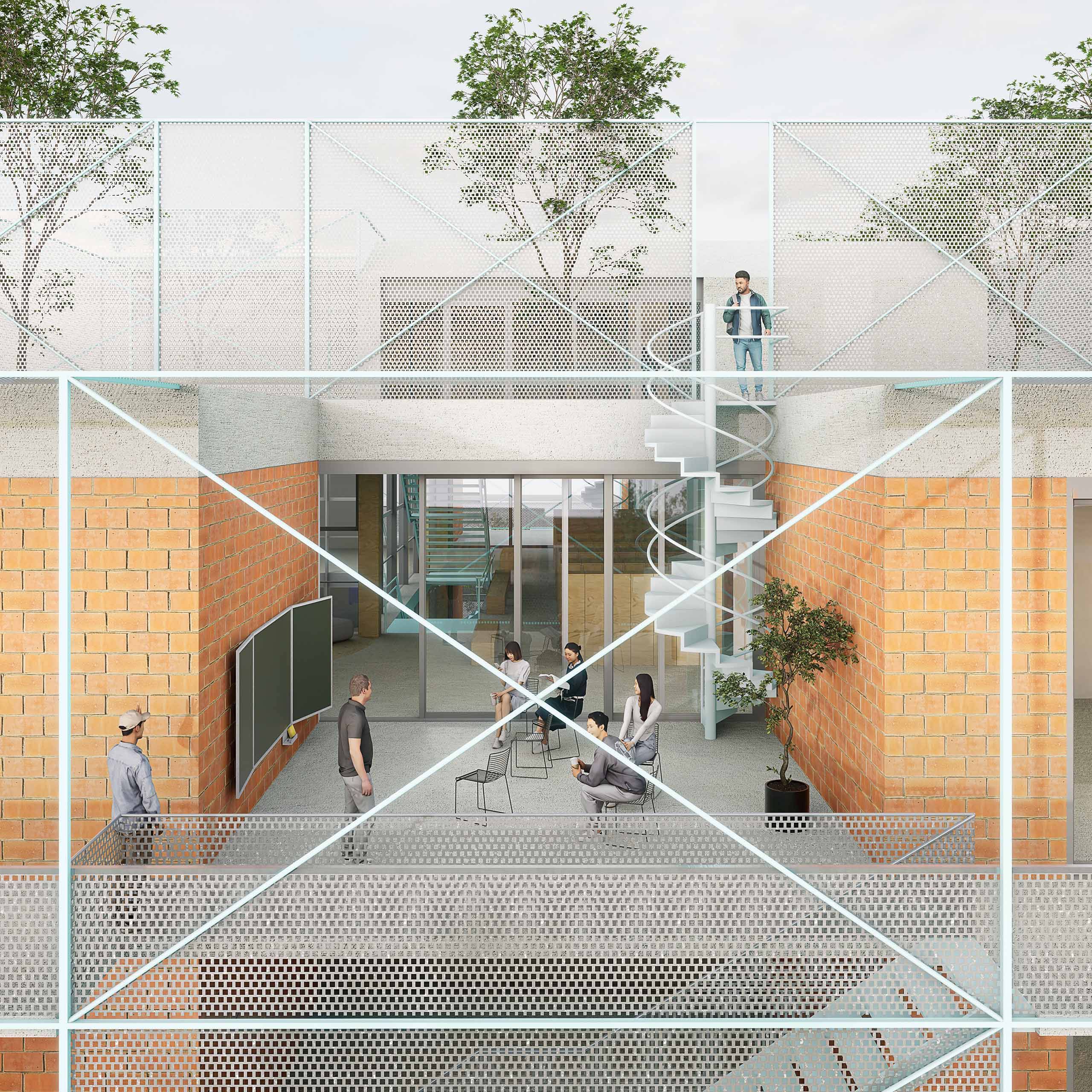
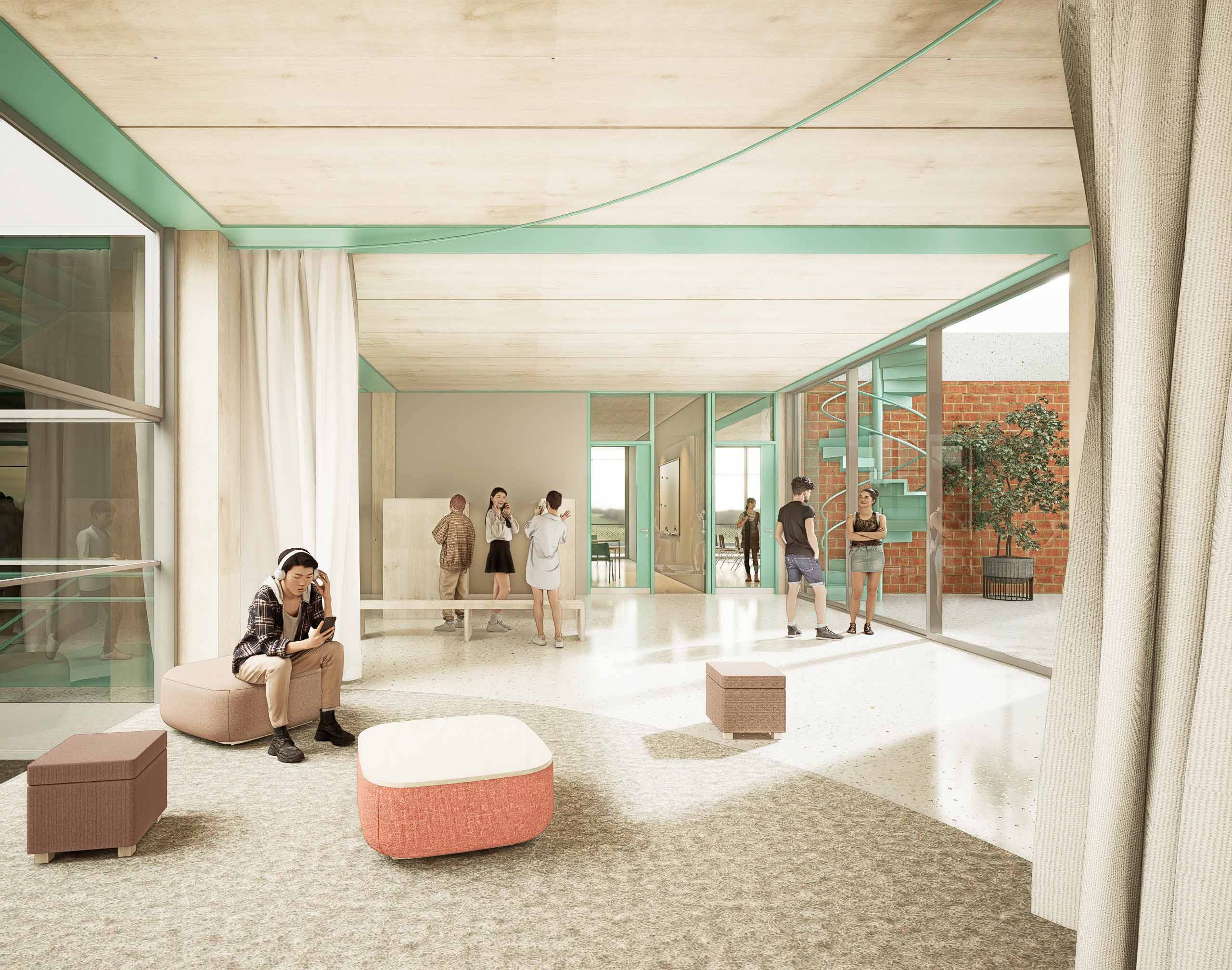
Each cluster contains four core classrooms, one multifunctional language classroom, a shared central space for group activities and relaxation, and an outdoor classroom allowing for lessons to be moved into the fresh air. Cluster teaching in this arrangement supports well-being, interdisciplinary cooperation, and community learning – students and teachers can naturally collaborate across subjects and topics within the environment of a small learning community.
Visual connection between the classrooms and the central space is ensured by large glass partitions and walls. This transparency increases the sense of openness, supports mutual communication, and contributes to safety through natural supervision and shared awareness of classroom activities. The architectural design utilizes natural materials and principles of biophilic design – ample daylight, indoor greenery, and natural surfaces – which positively influence the health and psychological well-being of students and educators.
Structural and Technical Solution
The building's load-bearing system consists of a prefabricated skeleton, which accelerates construction while ensuring high variability of internal spaces. The construction principle is based on a combination of wooden columns and hybrid wood-concrete floor slabs with composite beams. This solution combines the low carbon footprint of wood with the strength properties of concrete.
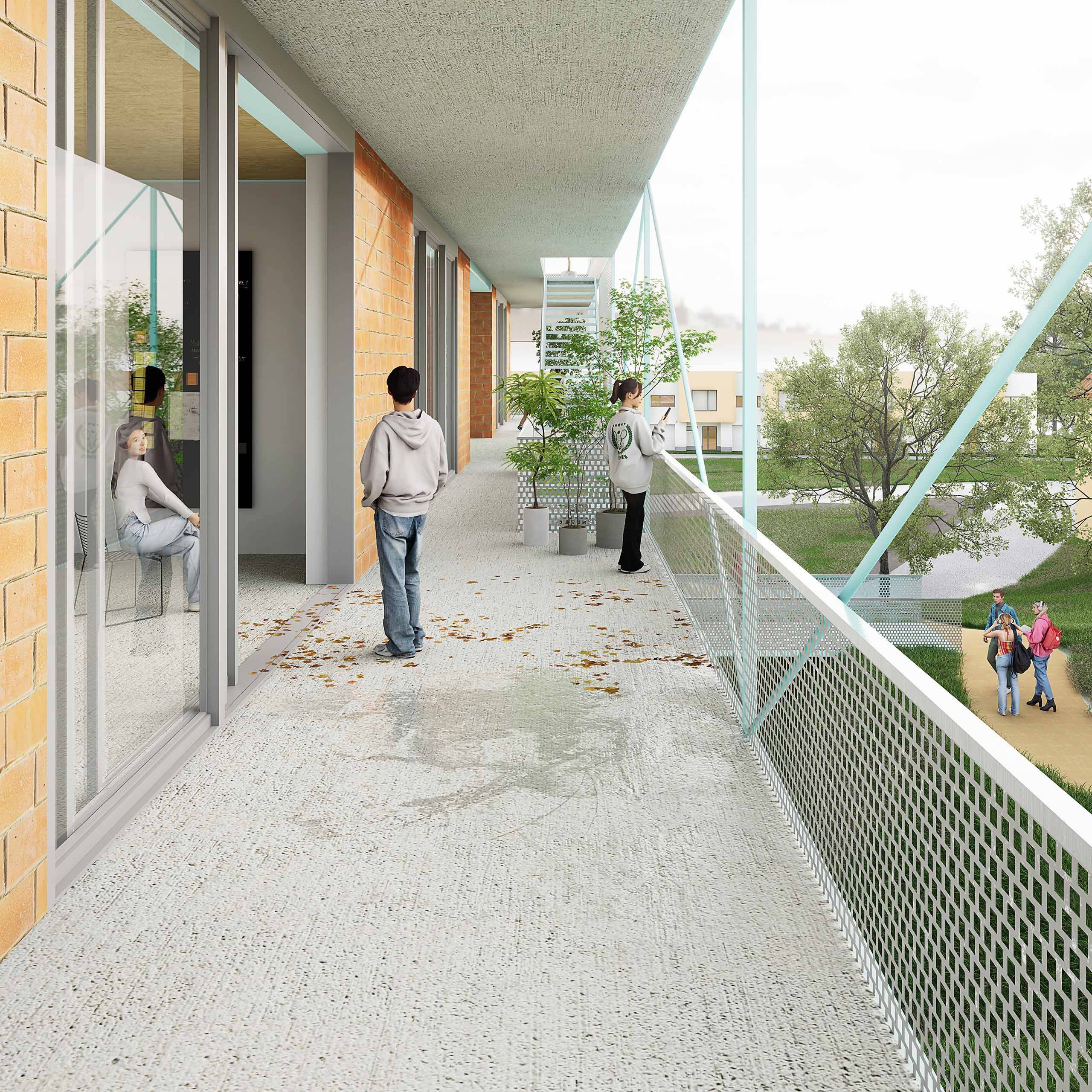
Prefabricated concrete galleries are placed on the facade, extending the outdoor space of the classrooms while supporting external shading elements. These significantly reduce interior overheating during summer months. Combined with massive exterior walls, the building is designed to operate exclusively with natural ventilation, minimizing the need for complex HVAC systems.
The building envelope consists of massive brick masonry supplemented by a ventilated rainscreen wall made of solid fired bricks – a solution focused on high thermal phase shift and a stable indoor climate. The brick remains exposed in its natural materiality, protected only by a colorless hydrophobic impregnation that ensures its long-term durability.
The proposed material solution connects state-of-the-art building technologies with a nod to the historical tradition of local brick production, giving the building an authentic yet highly functional expression.