Občianska vybavenosť
Svätý Jur Cultural Center
Svätý Jur Cultural Center - competition
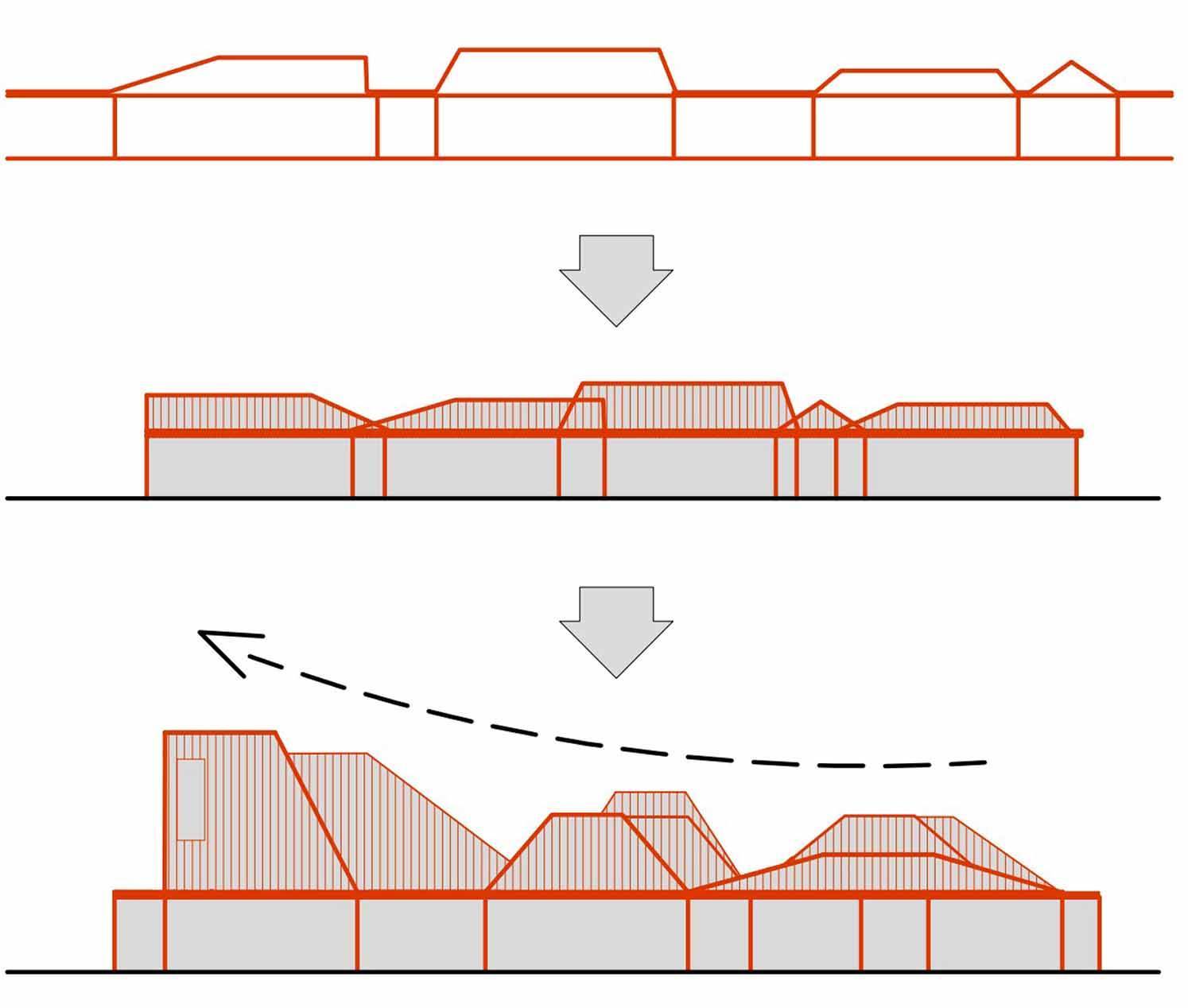
The design responds to the requirement of creating a modern cultural center, in contrast to the traditional urbanism of compact Small Carpathian development. It seeks to resolve the contradiction between the scale of modern community halls and the traditional urbanism of compact residential development. Due to its future social function that transcends local significance, the design of the Cultural Center in Svätý Jur is conceived as an accent that refers in its architectural expression to the archetypal tradition of the Small Carpathian wine-growing region.
Urbanism
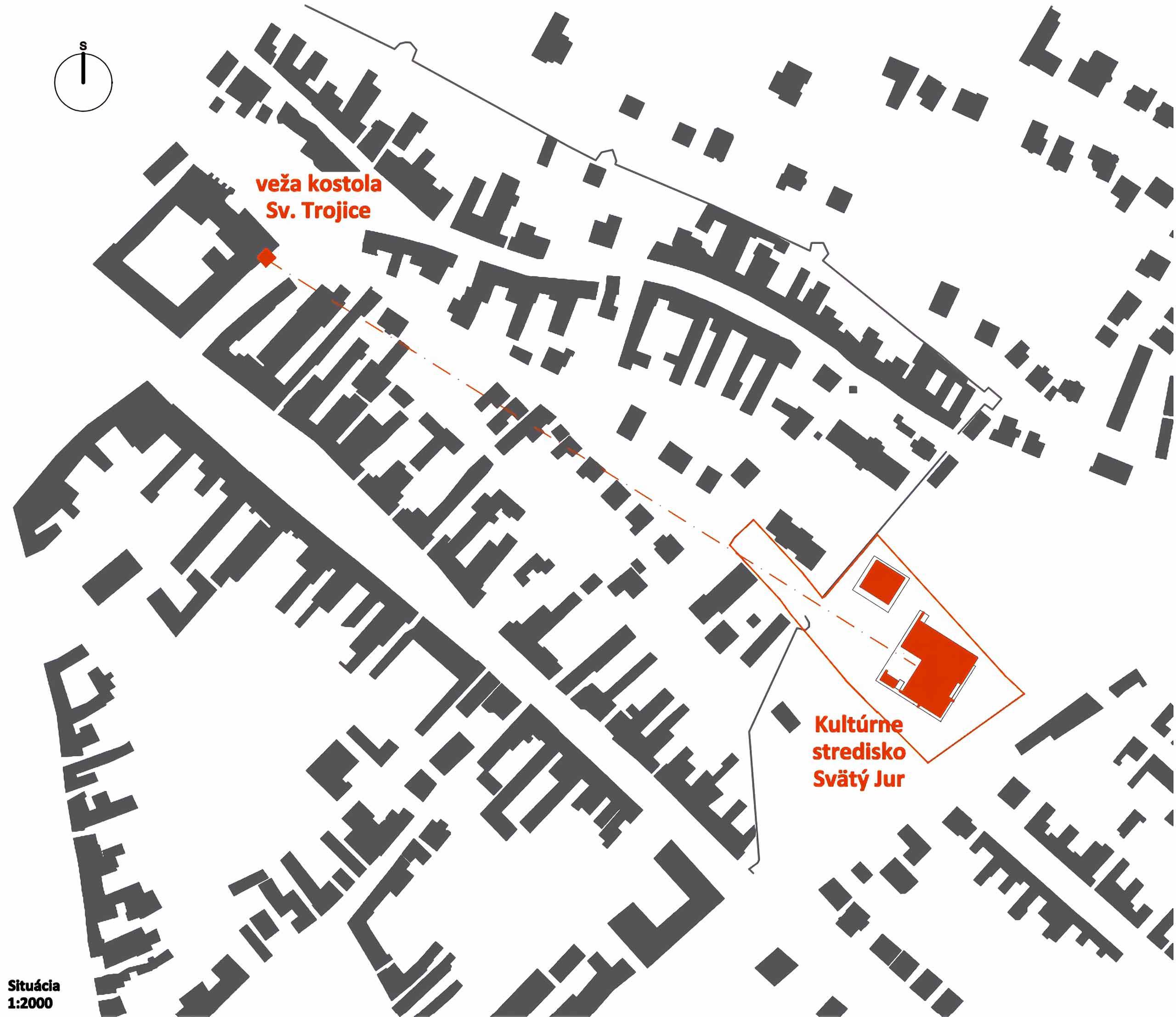
The placement of the building, together with the newly created square and park, forms the termination of the pedestrian axis of Mikovíniho Street. The inclination of the mass toward this axis engages the new center into the urban context, resulting in unexpected views of the tower of the Holy Trinity Church as a spatial dominant, from the atrium of the cultural center. This proposed placement creates the desired tension in the area and, together with the observation tower, creates a new sensitive accent in the wider territory.
Heritage protection and contextual solution
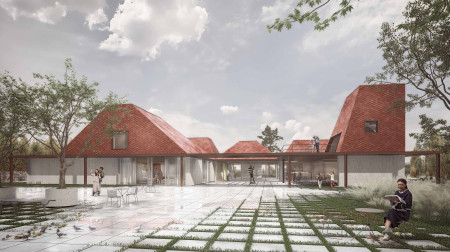
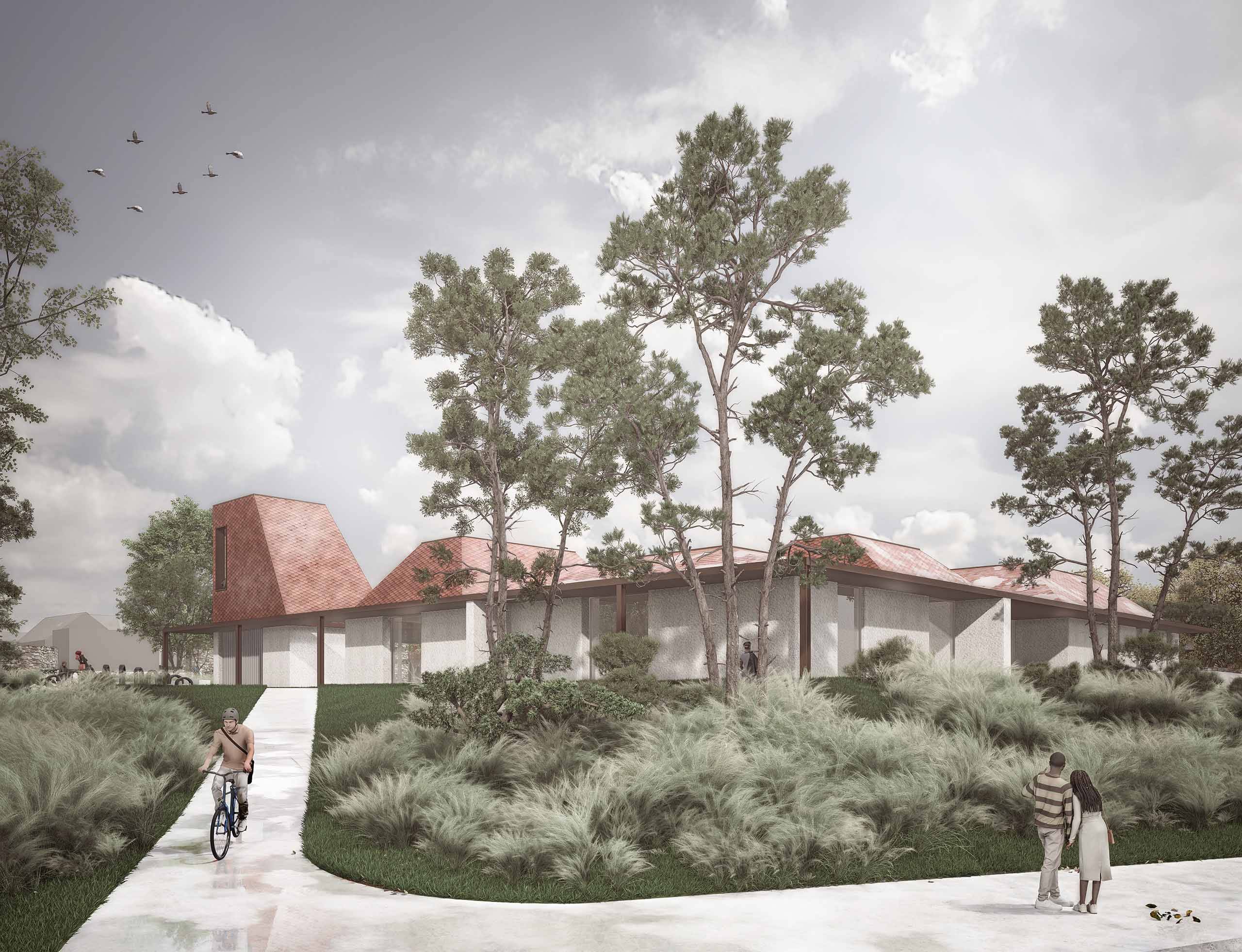
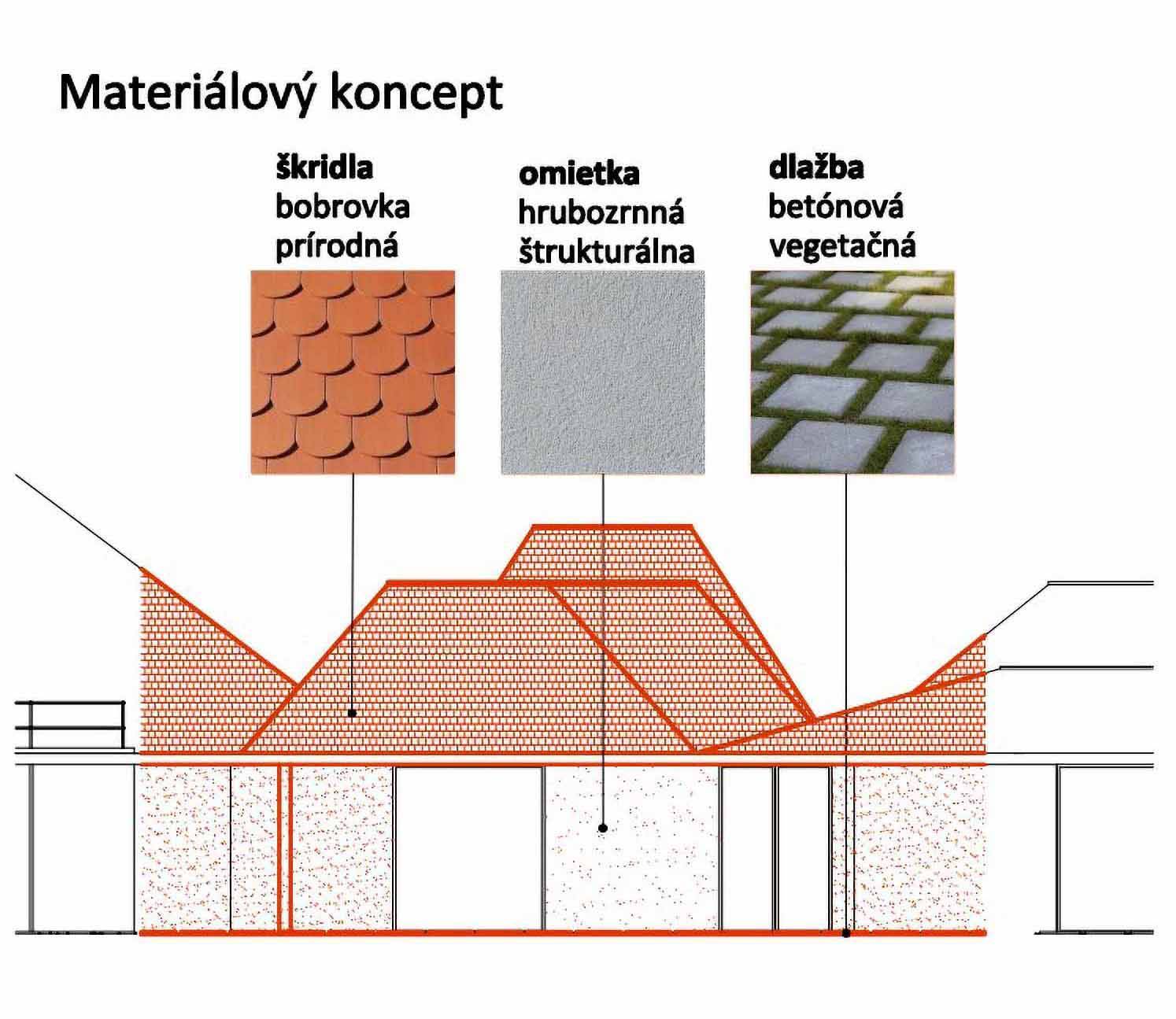
One of the main motifs of the design is the distinctively shaped roof plane of the buildings, which follows the characteristic "roof landscape" of Svätý Jur, and thus harmoniously blends with it. The historical context is preserved through the material solution, which draws from the tradition of Small Carpathian vineyard architecture and its contemporary interpretation – coarse white plaster and ceramic tiles, which are sensitively complemented by steel shading elements referring to the traditional "gánok" gallery, newly created in a contemporary expression. The existing walls are preserved and used as a visual background for the newly created square.
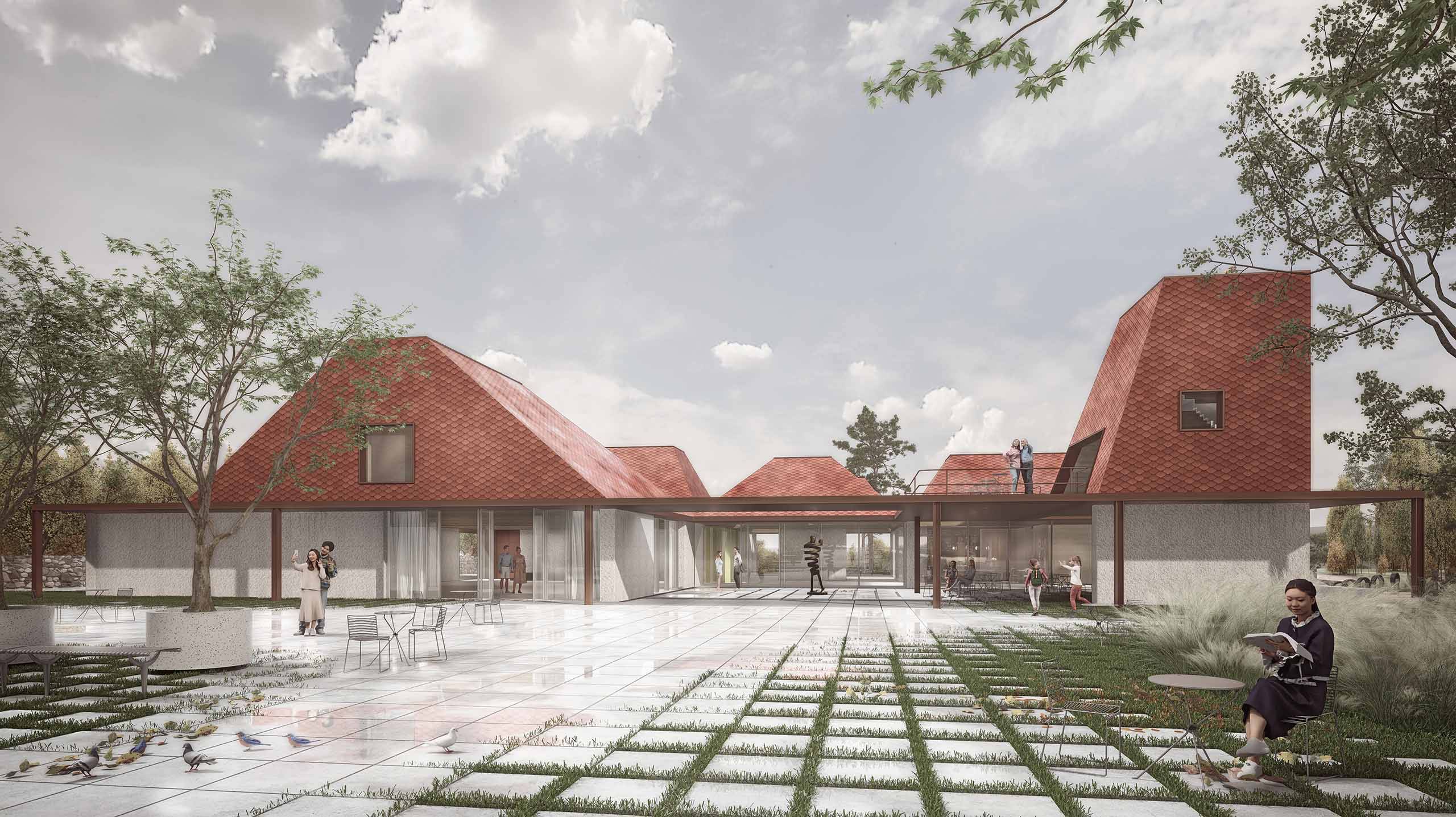
Square/Park
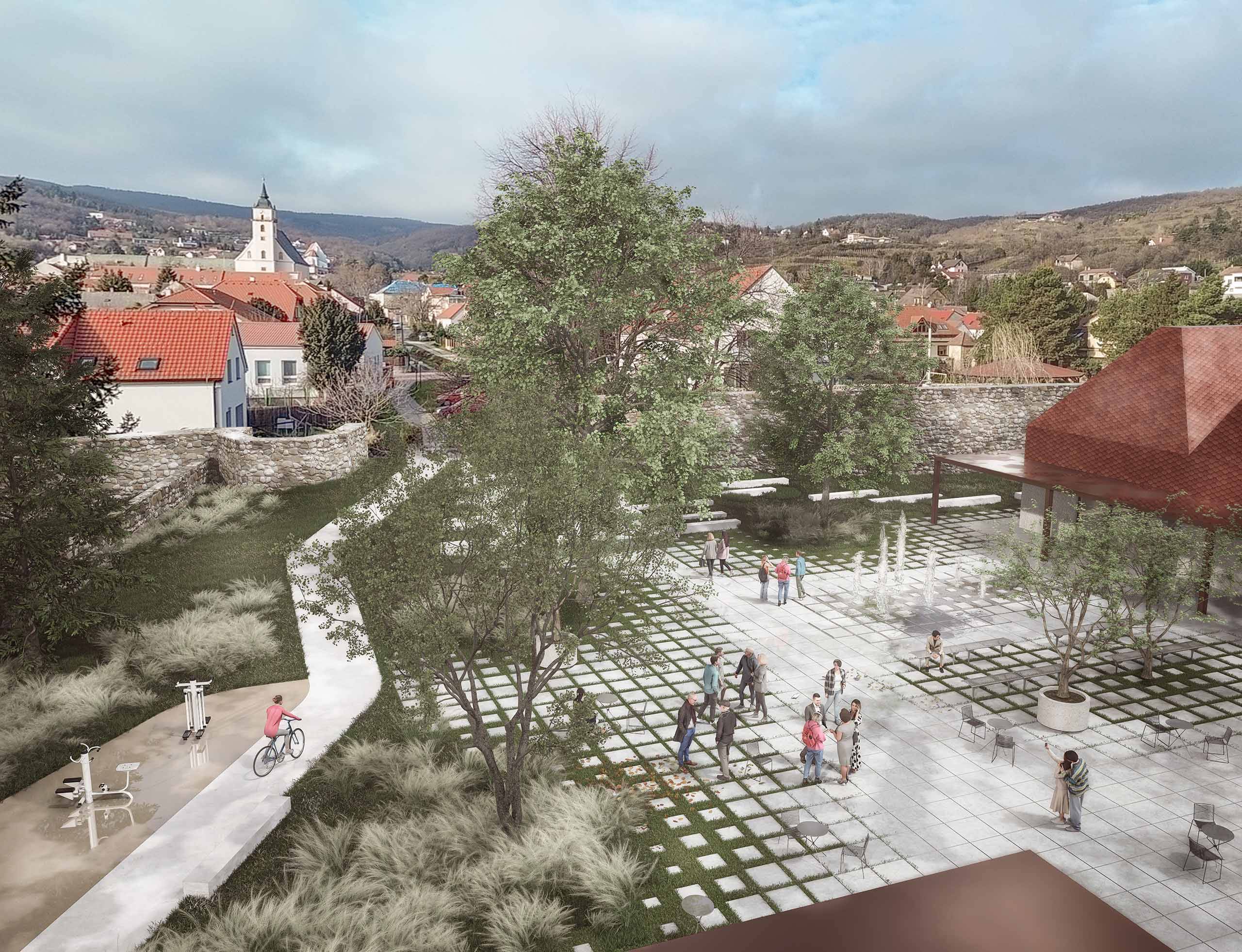
The aim of the design is to create an active square that naturally connects to the pedestrian route along the "Old Jur Mill Stream", thereby closing the communication axis: Scheidlin's Garden – Holy Trinity Church – Jewish Synagogue and the new cultural center. The paved surface above the underground garages allows flexible use according to current needs. Mature greenery in mobile planters is placed in the square space, ensuring variability of the public space. An active water feature in front of the multifunctional building contributes to improving the microclimate. A layer of substrate and gravel above the underground garage collects and gradually releases rainwater from the square toward the adjacent greenery above the piped stream.
Along the square in the southwestern part of the area, a strip of park greenery flows together with a sidewalk, exercise areas, and a children's playground visually connected to the café space in the cultural center building. Planting of mature trees and park vegetation contributes to the ecological stability and biodiversity of the area. This strip of greenery extends to Krajinská Road, along which barrier greenery is preserved between the road and the building itself. In the future, a biocorridor can thus be created, connecting Mikovíni Street with a possible future strip of greenery on Krajinská Road.
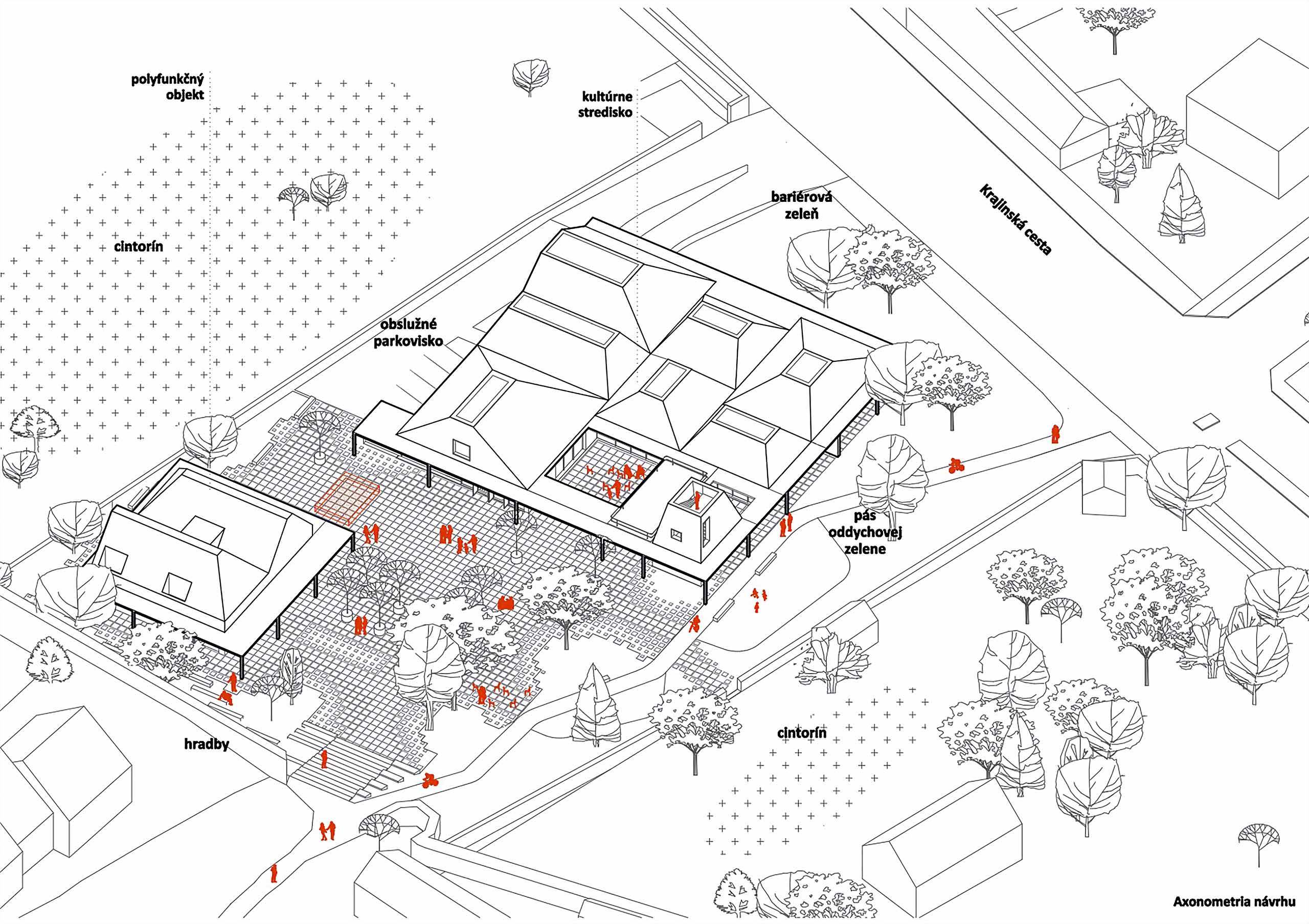
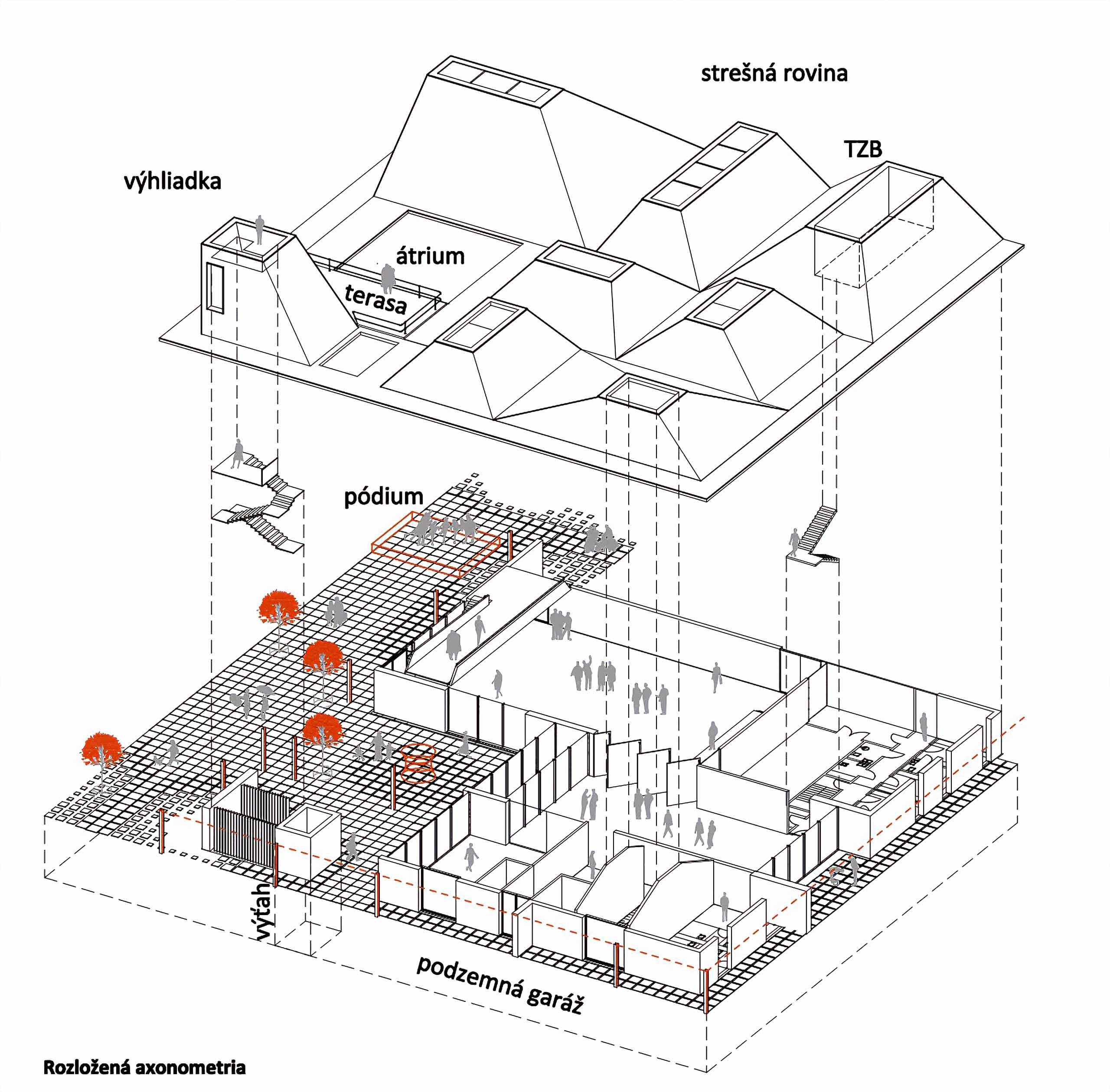
Spatial layout of the cultural center is designed to maximize the flexibility of its use. Two community halls are directly connected to the central foyer, separated by sliding partitions. This arrangement allows modulation of the connection of the halls with the foyer and creates a wide range of usage scenarios. By opening the main hall and entrance lobby to the atrium and square, the cultural center becomes an active part of the adjacent public space.
The complex also includes an observation tower, which follows the communication core connecting the square with the underground garage. This tower offers two levels of views. The first level is placed on the roof above the atrium with a view of the square, and the second level, from which an unexpected panoramic view of the entire town of Svätý Jur opens, thereby enriching the design with another attractive element and strengthening its relationship to the location.
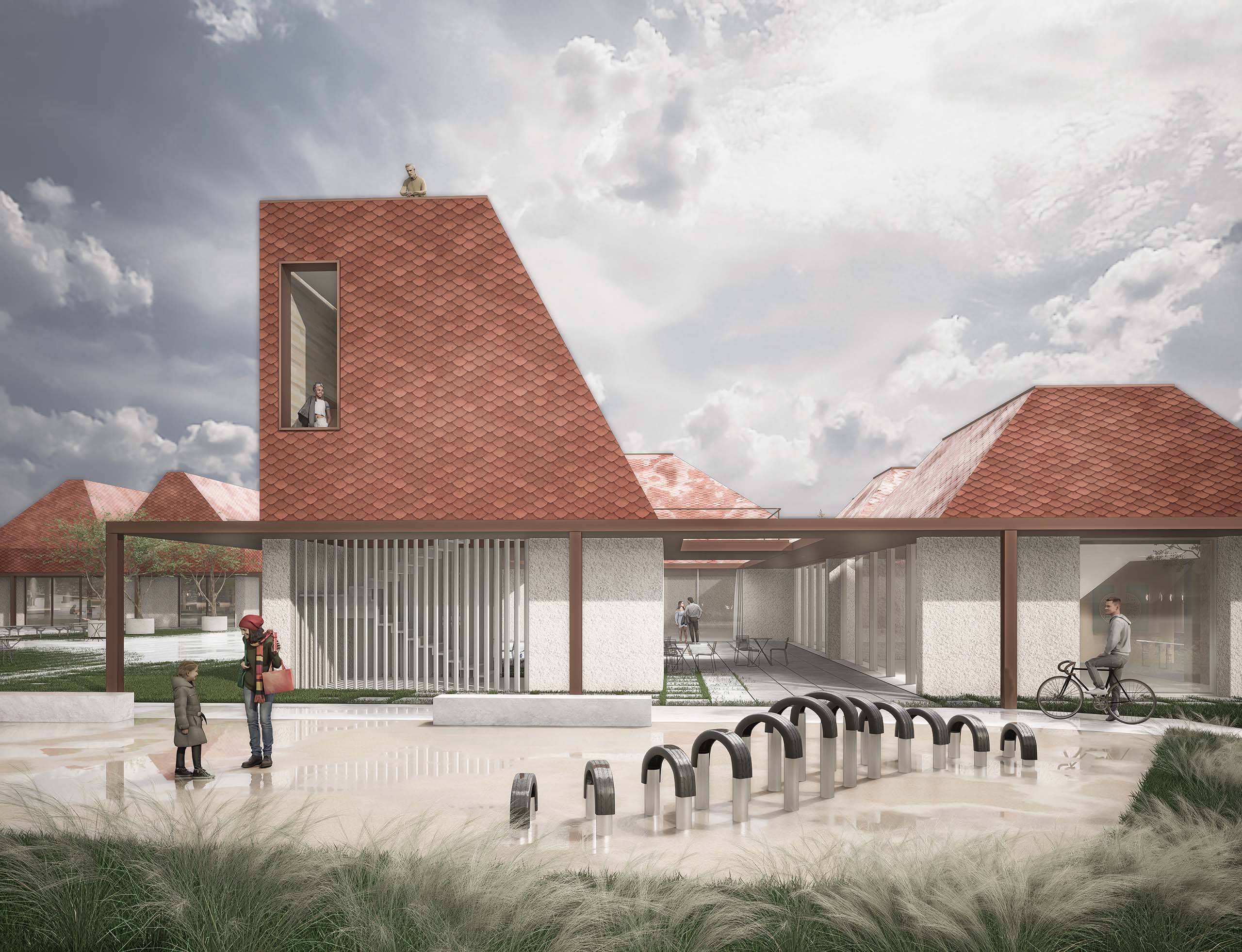
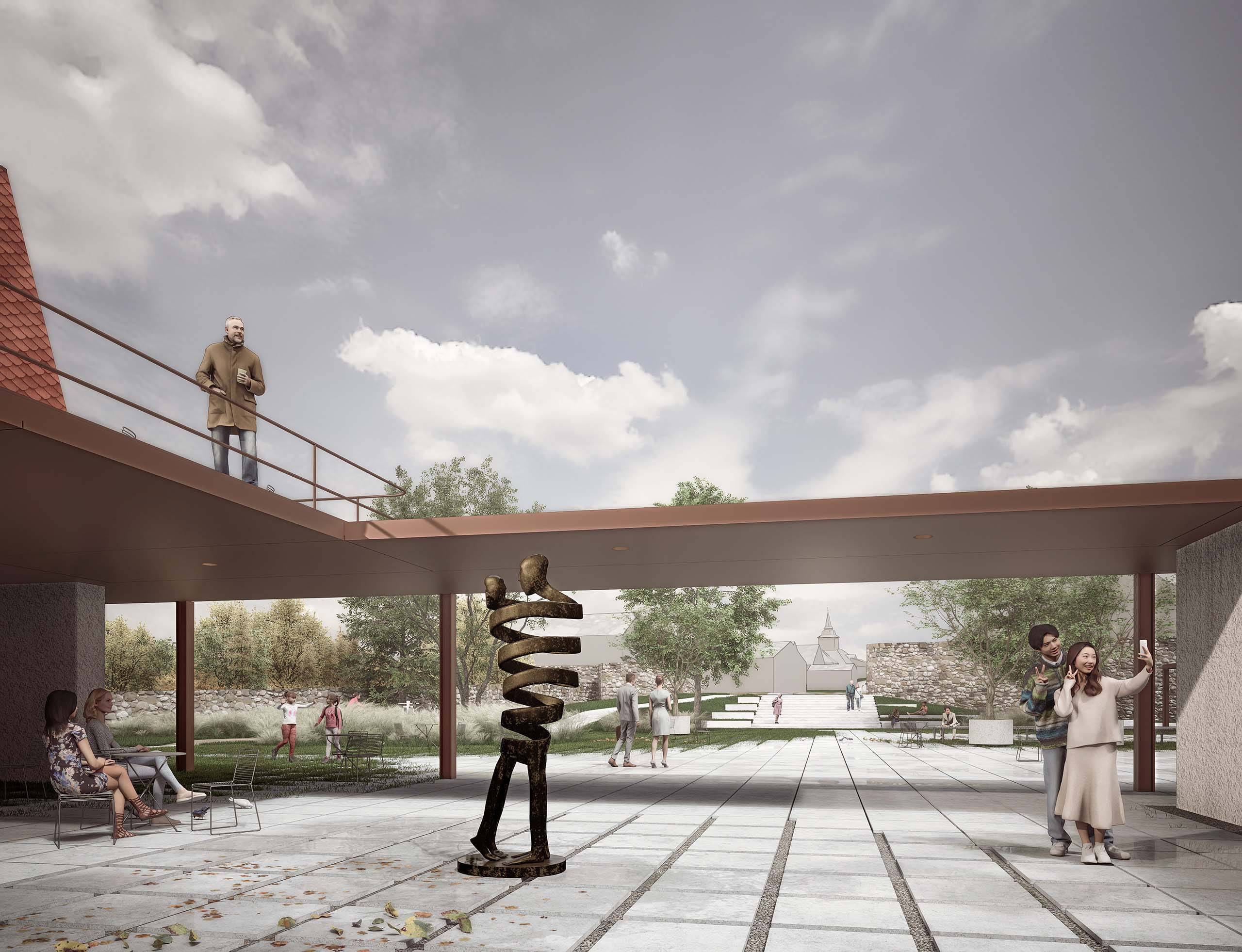
The realization of the multifunctional building with municipal apartments in the space by the walls in the northern part of the area is designed as a separate phase of the project. Facades oriented toward the square are designed to create a friendly, active ground floor, shaded by a "veranda," which also protects the glazed surfaces from solar radiation.
Parking is primarily solved in the underground parking lot. In the northeastern part, by the cemetery, a service road with temporary parking spaces for short-term parking for visitors to the facilities in the complex is proposed. This road also allows access for service vehicles to the square.
The pedestrian connection over the piped stream from Mikovíni Street follows the existing pedestrian crossing, which further connects the southeastern part of the town with family house development. New secondary entrances to the surrounding cemeteries directly from the square are proposed, thereby shortening the access distance for visitors and creating new pedestrian routes through the area.
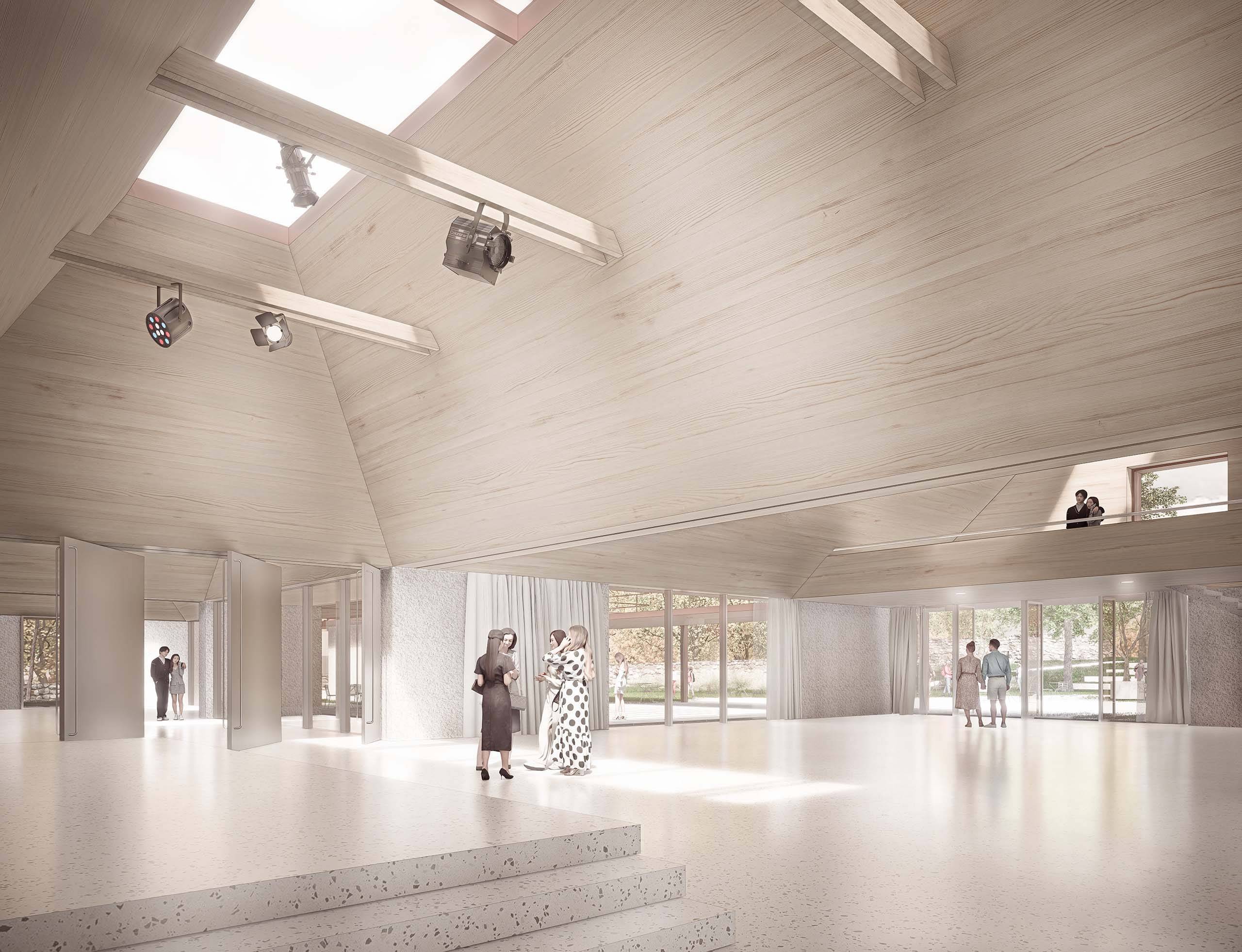
The overall concept of the building is designed to allow its natural aging without the need for additional investments, which represents a significant contribution to reducing the carbon footprint. From a material perspective, the building is conceived with emphasis on long-term sustainability and durability. The load-bearing structure combines monolithic reinforced concrete construction of the basement with backfills from recyclate from the original building with massive brick walls and wooden roof construction of the buildings themselves.
In designing the structures, emphasis is placed on the use of ecological materials such as wood, recycled aluminum, hemp insulation, ceramic tiles without surface treatment, and durable thick brizolite plaster on facades protected from direct rain and sun. These materials naturally "age" together with the building, thereby contributing to minimizing the carbon footprint not only during construction but throughout the entire life of the building. The overall design of the building is oriented toward meeting certification criteria such as BREEAM, LEED, or other European standards and directives in the field of sustainability.
As part of environmental measures, installation of photovoltaic panels is not considered due to heritage protection of the roof landscape. Nevertheless, it is anticipated that the building will be supplied exclusively from renewable energy sources that will be generated within the broader concept of solar energy distribution at the level of the entire town.
V nadväznosti na vnútroblokovú zeleň je navrhnutý mestský park, ktorý poskytne kvalitné vonkajšie priestory pre nájomníkov objektu, ako aj pre obyvateľov okolia. Park je navrhnutý tak, aby prirodzene rešpektoval existujúci terén a plynulo prechádzal do komunitného námestia pred novostavbou. Park je vertikálne členený na terasy, ktoré umožňujú bezbariérový prístup a ponúkajú rôzne aktivity - od cvičenia na strojoch až po oddych na lavičkách. Terasy sú prepojené rampami a schodiskami, ktoré zabezpečujú výškové prepojenie celého verejného priestoru. Pred objektom vznikne námestie s kaviarňou, ktoré spolu s aktívnym parterom objektu poskytne atraktívne miesto pre komunitné akcie.
In connection with the inner-block greenery, an urban park is designed, which will provide quality outdoor spaces for tenants of the building as well as for residents of the surroundings. The park is designed to naturally respect the existing terrain and flow smoothly into the community square in front of the new building. The park is vertically divided into terraces that allow barrier-free access and offer various activities - from exercising on machines to relaxing on benches. The terraces are connected by ramps and stairs that ensure vertical connection of the entire public space. A square with a café will be created in front of the building, which together with the active ground floor of the building will provide an attractive place for community events.